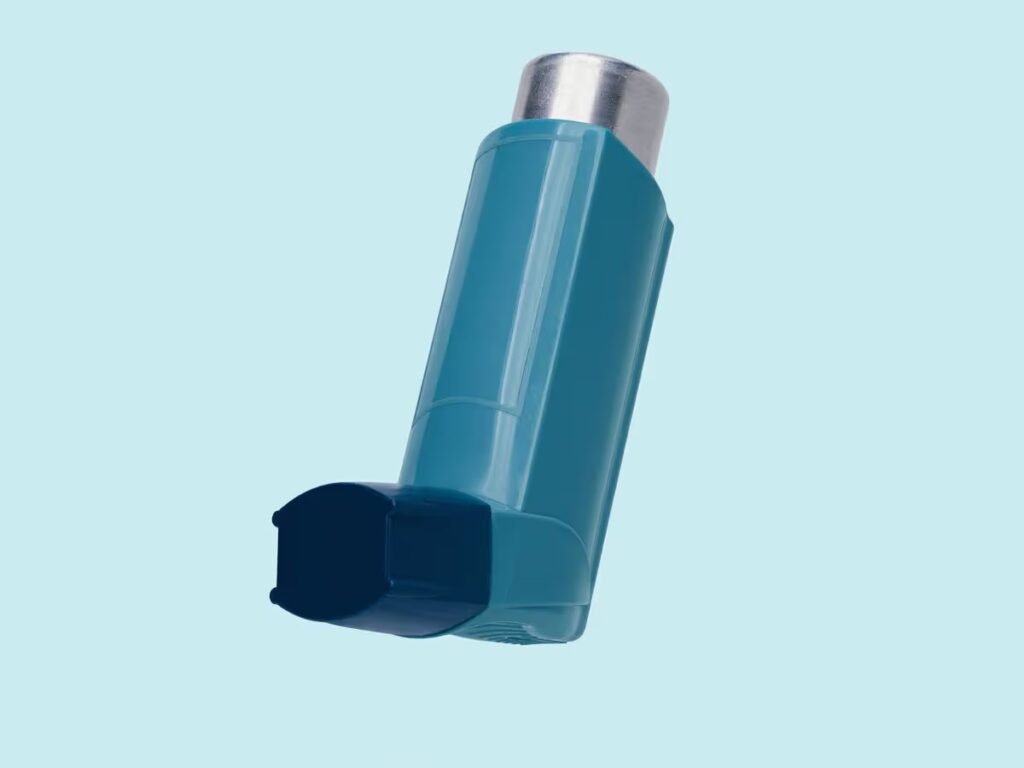
Many people with asthma rely on their blue inhaler and nothing else. It feels like it’s doing the job. But if you reach for it often, it may be a sign your asthma needs more help.
Two inhalers, two different jobs
Your blue inhaler is a reliever. It opens your airways quickly when you feel wheezy, tight or short of breath. The effect wears off after a few hours.
A preventer inhaler works in a different way. It calms the swelling inside your airways. You take it every day, even when you feel well. Over time, it makes asthma attacks less likely.
Think of it this way. Your blue inhaler puts out the fire. Your preventer stops the fire starting.
Why relying on blue isn’t enough
A blue inhaler eases your symptoms, but it does nothing for the swelling underneath. That swelling is what leads to asthma attacks.
Asthma + Lung UK estimates that around one million adults in the UK rely too much on their reliever. Four people die from asthma attacks every day in the UK, and many of these deaths could be prevented.
Is your asthma under control?
Your asthma may need a better plan if:
- You use your blue inhaler three or more times a week
- Asthma wakes you up at night
- Your symptoms stop you exercising, working or sleeping well
- You need a new blue inhaler more often than you used to- you use it mare than 2-3 times per week
- You have had an asthma attack in the last year
If any of these sound like you, please book an appointment. Well-controlled asthma should barely get in the way of your life.
Newer ways to treat asthma
Asthma treatment in the UK has changed. Many people are now offered one inhaler that does both jobs. It calms the swelling and eases symptoms at the same time.
If you have only ever used a blue inhaler, it is worth asking us whether this might suit you better.
Get the most from your inhalers
- Take your preventer every day, even when you feel well
- Ask us to check how you use your inhaler. Many people miss out on part of the dose without knowing
- Use a spacer if you have one. It helps more medicine reach your lungs.If not ask your local pharmacist or doctor
- Rinse your mouth after using a preventer
- Carry your reliever with you at all times
- Have an asthma review at least once a year
Your asthma action plan
An asthma action plan is a simple written guide made with your doctor or nurse. It tells you which medicines to take each day, what to do when symptoms get worse, and when to call 999.
People who use one are less likely to end up in hospital. If you don’t have one, ask us at your next appointment.
What to do in an asthma attack
You may be having an asthma attack if your symptoms get worse quickly, your blue inhaler isn’t helping, or you find it hard to walk or talk.
- Sit up straight and try to stay calm
- Take one puff of your blue inhaler every 30 to 60 seconds, up to 10 puffs
- If you feel worse, or don’t feel better after 10 puffs, call 999
- If help hasn’t arrived after 10 minutes, repeat step 2
If you don’t have your inhaler with you, call 999 straight away.
If you use a combined inhaler, follow the steps in your own action plan, as they are different.
After any asthma attack, see your GP within two working days, even if you feel better.
Breathe easy
Asthma is very common, and with the right treatment most people live full, active lives.
If you rely on your blue inhaler, or it has been a while since your last asthma review, book to see your Doctor.